We use optional cookies to analyze traffic and personalize content.

Blog
Stay updated with the latest insights, guides, and news about eCommerce competitive intelligence.

Can an AI agent buy from your store, or from your rival's?
We checked 351 ecommerce stores and ran a real AI shopping race to see which ones an AI shopping agent can actually buy from. Two out of fifteen stores made the sale. Plus a free calculator to see what your rivals' discounting is worth to you, built on real promotion data from the last 30 days.

What a competitor's technology change actually tells you
A competitor adding a new payment provider, review platform or loyalty tool is not a cosmetic update. Here is how to read a technology change as a strategy signal, with a live example: the Buy Now Pay Later leaderboard just flipped, Klarna overtook Afterpay across the active ecommerce brands we track, and what that and three other live signals mean.

Black Friday 2026: the first movers start 70 days early. Here is what to watch.
Last year the typical brand ran its first Black Friday or Cyber Monday ad 11 days out. The first ran 70 days out, with no discount in it. 50 days before Black Friday 2026, there are zero mentions in ads, emails and social posts, but 147 brands already have a live Black Friday page. Here is what to watch, week by week.

How AI Shopping Agents Choose Which Products to Show - And Why Your Product Feed Matters More Than Your Product Page
Google AI shopping features pull 83% of results from Merchant Center product feeds, not from crawling product pages. Products from structured feeds get the best price label 100% of the time versus 21% for page-scraped products. Here is what this means for your ecommerce strategy and how to audit your feed.

Google AI Overviews Now Appear on 80% of Branded Searches - What eCommerce Brands Need to Know
AI Overviews jumped from 26% to 80% of branded queries in September 2026 alone. When someone searches your brand name, Google AI now writes a summary that may include competitor mentions, pricing comparisons, or sentiment you do not control. Here is how to check yours and what to do about it.

The Outset shut down. The signals were on its homepage first.
The Outset, a celebrity-founded skincare brand, closed four years after launch. Lined up against rhode, which launched the same year, its homepage showed four competitive signals long before the outcome: late launch timing, a $105 hero against a $16 entry point, positioning that held while the category moved, and promotions that escalated while the homepage stood still. Here is how to read the same signals on your own competitors.

Losing sales to competitors? How to tell if your ecommerce slump is a competitor problem, and what to do about it
Online sales dropping is not automatically a competitor problem. This guide gives you the diagnosis: first rule out the causes inside your own funnel, then test the five competitive pressures that quietly drain sales - price cuts, promotions, launches, share of voice and AI search visibility - with a weekly checklist and the signal that tells each one apart.

How to track LLM visibility in ChatGPT, Gemini and Claude, and analyze your competitors' visibility over time
A ChatGPT answer has no results page, so you cannot check your rank the way you check Google. This guide gives you the measurement procedure: build a prompt set from real buying questions, run it on ChatGPT, Gemini, Claude and Copilot every week, log four signals per run, and compute mention rate and share of voice. Then read the trend lines that show a competitor overtaking you.

How to detect competitor product launches early: the signals that show up before the announcement
Competitor launches can leave traces on the storefront before the announcement. This guide orders nine pre-launch signals, adds a launch-versus-reskin test and a 72-hour playbook, and maps each signal to the tool category built to watch it.

Competitive gap analysis for ecommerce: how to run a competitor gap analysis and close each competition gap
A competitive gap analysis compares what your store sells, charges and promotes, and how discoverable it is, against a fixed set of direct rivals. This guide covers the five gap types that matter for an online store, a six-step method, a copyable template and a scoring model for deciding which competition gap to close first.

The Online Retail Radar - August 2026
Our monthly, fully anonymized read on the online-retail market. In August, express wallets were near-universal - PayPal and Apple Pay each sat around 84% - but far fewer stores named a shipping carrier, new brands kept moving beyond .com, and roughly 1 in 150 active listings looked like a suspected decoy. Four cuts of what the market actually did.

The Online Retail Radar - July 2026
Our monthly, fully anonymized read on the online-retail market. In July, just under a third of storefronts spoke more than one language and fewer than 4 in 10 exposed a machine-readable currency, catalogs added more than two products for every one they pulled, and tops led every rack. Three cuts of what the market actually did.

The invisible wall: how geo-IP blocking accidentally destroys your ecommerce SEO and AI indexing
US-only stores often hide 'Add to Cart' or flip products to 'Out of Stock' for non-US visitors. The problem: Google and AI crawlers arrive from those same international IPs, so they index your whole catalog as unavailable. Here is how it happens, the damage to rankings, structured data, and AI retrieval, and how to fix it on Shopify without shipping abroad.

AI content on your store now needs a label. The EU AI Act just made it law.
Article 50 of the EU AI Act became applicable on 2 August 2026. Here is what the AI transparency rules actually require, in plain English, with extra focus on the two places ecommerce brands get caught most: your website and your social media accounts. Plus a checklist and the exceptions that let you skip labeling ordinary product content.

The Online Retail Radar - June 2026
Our monthly, fully anonymized read on the online-retail market. In June, only 1 in 3 storefronts spoke more than one language and fewer than 4 in 10 exposed a machine-readable currency, catalogs added roughly two products for every one they pulled, and tops led every rack. Three cuts of what the market actually did.
Your competitive audit now writes its own work orders
Every action item in the AI Readiness report and Go-Live checklist now opens in Claude pre-briefed, or copies as a Claude Code prompt your developer can paste and run. And for the first time, non-technical founders and marketers can handle fixes that used to need a developer.

The math of competitor monitoring: why no team can do this manually anymore
Most ecommerce teams track 3-5 competitors. The number they should be tracking is closer to 30-50, across 30+ signal types. We did the math on how many daily checkpoints that creates and why no team can sustain it manually.

How AI bots really crawl your site (what we learned in May 2026)
ChatGPT-User and Meta AI took roughly 79% of AI bot hits on rivalsweeper.com in May 2026. The other four AI bots barely registered. And almost zero overlap in which pages each bot pulled. If you are optimizing for 'AI search' generically, you are optimizing for the wrong distribution curve.
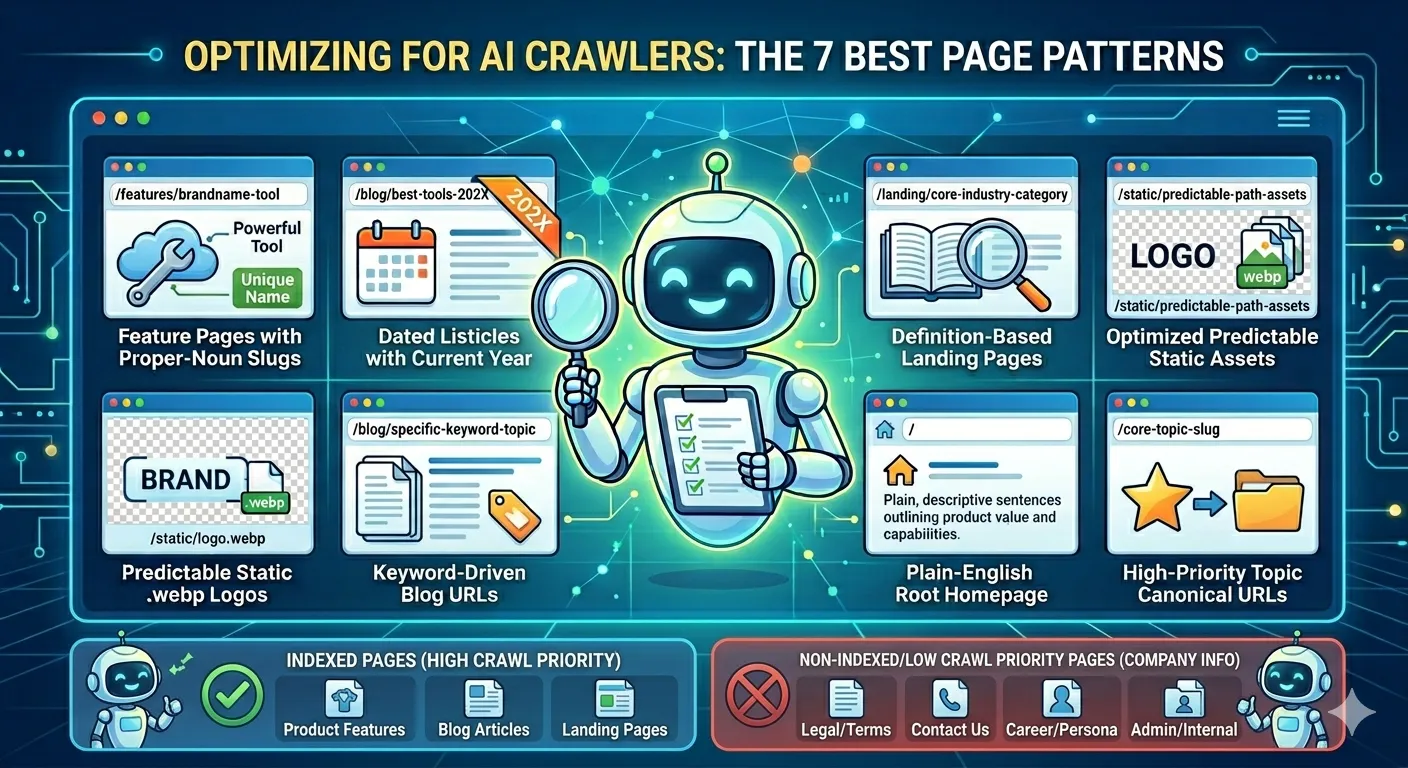
7 page types AI bots love and 3 they ignore (2026)
We watched 6 AI bots crawl rivalsweeper.com for a week in May 2026. 7 page types got pulled. 3 got zero hits. The pattern was sharp enough that we can tell you which URLs to ship next, and which ones to stop building. Ten rules from the data.

10 ChatGPT visibility tools for ecommerce brands (2026 buyer's guide)
A 2026 buyer's guide comparing 10 ChatGPT visibility tools for ecommerce brands. Pricing, engines tracked (ChatGPT, Gemini, Claude, Perplexity, Copilot and more), free tiers, standout features, a 3-step usage framework, and the 3 things every tool on the list misses.
Google Rankings vs AI Search Visibility: The Client-Ready Explainer (2026)
A client-ready explainer for SEO consultants and agencies. Side-by-side comparison table, five verbatim scripts you can paste into a client email today, and a one-pager hand-out. The cheat sheet for the conversation every agency has been having lately.

9 Best eCommerce Competitor Monitoring and Price Tracking Tools Compared (2026)
An honest buyer's guide comparing 9 tools across the full spectrum - from free screenshot alerts to $15K+/year enterprise platforms. Includes pricing, feature matrix, and a decision framework to pick the right tool for your team.
Why AI Search Visibility Matters More Than Google Rankings
Google rankings are not the full picture anymore. ChatGPT, Claude, and Gemini are answering buying questions directly. Here is why AI search visibility is the new competitive battleground for eCommerce brands.

How AI Overviews Are Changing eCommerce Competitive Intelligence
Google AI Overviews now appear on 14% of shopping queries. Here is what that means for eCommerce Competitive Intelligence, how to optimize for AI citation, and why structured data matters more than ever.
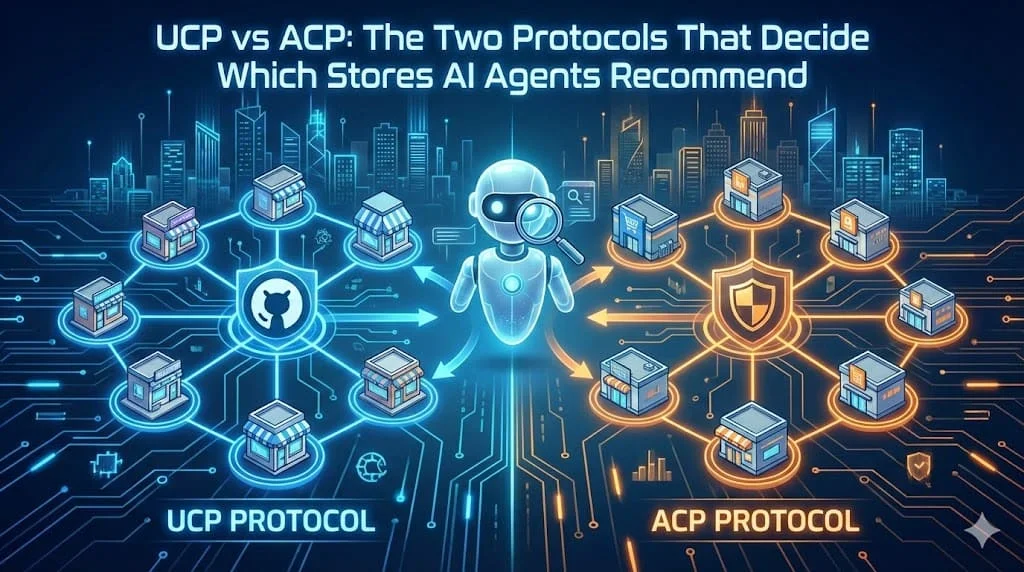
UCP vs ACP vs AP2 vs MPP: The Four Protocols Deciding Agentic Commerce
Google's UCP, OpenAI's ACP, Google's AP2, and Stripe + Tempo's MPP now control discovery, checkout, authorization, and payment for AI shopping agents. Here is what eCommerce brands need to know about all four.

Why SaaS Dashboards Are Not Enough: The Case for Proactive Competitive Intelligence
Your competitors made 47 changes last week. Your dashboard saw all of them. Your team saw none. Here is why the dashboard-first model is broken and what proactive competitive intelligence looks like in practice.

9 eCommerce Competitive Intelligence Tools Compared (2026 Pricing)
Side-by-side comparison of 9 competitive intelligence tools with real pricing from $39 to $15K+. Features, AI readiness, limitations, and which tool fits your eCommerce team.

Google WebMCP Explained: How AI Agents Will Shop Your Store (2026)
Google WebMCP lets AI shopping agents browse, search, and buy from stores programmatically. Includes a WebMCP vs UCP vs MCP protocol comparison table and what eCommerce brands must do now to stay visible to AI agents.
AI Shopping Agents Are Choosing Winners Right Now - Is Your Store One of Them?
JD Sports sells through ChatGPT. Walmart checks out inside Gemini. McKinsey says $1T by 2030. AI agents are choosing which stores to recommend - and most brands have no idea where they stand. Here is what is happening, what your competitors are doing about it, and how to find out if you are in the game.

Why Competitive Intelligence Is More Than Price Monitoring
Pricing data is one signal among dozens. The D2C brands gaining ground fastest are the ones reading the full competitive picture - catalog shifts, marketing pivots, shipping changes, and operational moves that pricing dashboards never show.

D2C Competitor Analysis: The 5-Signal Framework That Top Brands Use
Most D2C brands track competitors manually and miss 94% of changes. Learn the 5-signal framework (pricing, catalog, marketing, stock, content) with a tracking approaches comparison table.

Competitor Catalog Monitoring: See Every Product Your Competitors Add, Change, or Remove
Everyone tracks competitor prices. Almost nobody tracks their catalogs. That is like watching a chess game and only looking at the pawns. Here is what you are missing - and why it matters more than you think.

How to Track Competitor Products: 6-Step eCommerce Framework (2026)
Track competitor products across 40,000+ URLs with this 6-step framework. Covers manual, semi-automated, and fully automated approaches with a tools comparison table and decision framework.

Competitor Price Monitoring for eCommerce: Beyond Just Tracking Numbers
Your competitor dropped prices on 140 SKUs last Tuesday. A price-only dashboard told you the what. But nobody told you the why, the pattern, or what to do about it. Here is what real price monitoring looks like.

The 5 Competitive Moves Your Rivals Hope You Never Track
Your rivals changed 140 SKUs and 12 pages last week. You caught zero. Learn the 5-pillar tracking system top eCommerce teams use to never miss a competitive move again.

Step-by-Step Guide: Adding RivalSweeper RSS Feed to Google Chat
Learn how to set up a new room in Google Chat, add an RSS feed, and invite your colleagues for updates. This comprehensive guide walks you through the entire process.

Step-by-Step Guide: Adding RivalSweeper RSS Feed to Microsoft Teams
This guide will walk you through how to set up a new Microsoft Teams channel, add an RSS feed to the channel, and invite your colleagues to join.

Step-by-Step Guide: Adding RivalSweeper RSS Feed to Slack
This guide will walk you through the process of setting up a new Slack channel, adding an RSS feed, and inviting your team members.

Step-by-Step Guide: Adding RivalSweeper RSS Feed to Outlook
This guide will walk you through the process of adding an RSS feed to Microsoft Outlook so you can receive RivalSweeper updates directly in your inbox.

Step-by-Step Guide: Adding RivalSweeper RSS Feed to Lark
This guide explains how to set up a new group in Lark, add an RSS feed to that group, and invite your colleagues to keep everyone updated.